HEATH/MORRISON
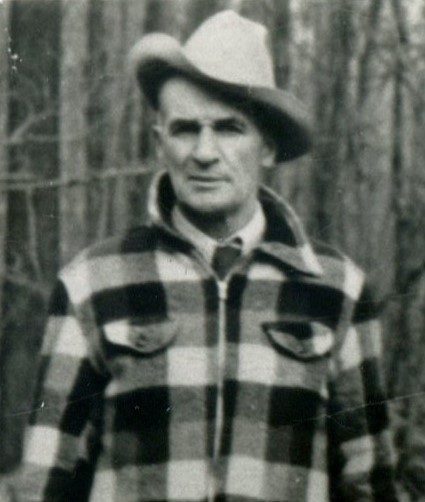
In 1940, the following newspaper article recounted Thomas Morrison’s life as a cowboy, or more accurately, a rancher in Alberta at the turn of the twentieth century.
Call of Great Open Spaces Made Cowboy of T. Morrison
Back in 1907 a rugged 16-year-old lad who loved to ride frisky horses and had dreams of cowboy life in the wide open spaces, succumbed to the “go West young man” dictum, and headed westward, landing at Airdrie, Alta., with exactly $4 in his pocket. His name is Thomas Morrison, so of the late Mr. and Mrs. Charles Morrison, of Wardsville, where a brother and sister still reside. At Airdrie he realized his boyhood ambitions and after many months of the saddle “cowpunching” on the range became an expert rider and roper.
For many years he was a familiar figure at the Calgary, Edmonton and other stampedes where he competed against the world’s best riders and was several times champion in an event which required split second timing and faultless co-ordination of both man and beast since the competitor had to guide his team around the course poised with one foot either horse and only the reins to retain his balance, while his charges galloped at breakneck speed [this was known as Roman Riding].
Eight years ago Tommy retired from active competition and today on his 480-acre ranch at Airdrie has probably the best stable of horses in the Prairie Provinces. Five horses carried the colors of the ex-cowboy this year, Messenger Maid, Prince Pagan, Cave Boy, Some Do, and Purple Heather. Two others, Tokenn and Goldies Pride, were sold recently at fancy prices.
Betting does not come into his calculations to make a living, but rather he has made it the hard way and is respected by racing officials and other owners alike. Tommy Morrison is practically an all-Alberta business concern. With the exception of Cave Boy, which was bred in Eastern Canada, all of his horses were bred in that province. He is considered the most successful Western owner in the sport today.
London Evening Free Press, 9 Nov. 1940, p. 19, c. 6.
 Ancestors of Ancestors